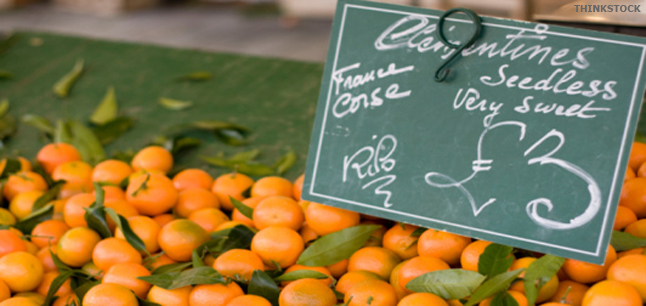
A market stall trader sells goods or services from a stall, either in a street or indoor market. The goods may be food, clothes, antiques, books or bric-a-brac, and might be new or second-hand. Services might include repairing or maintaining items such as computers or household items.
The Work
You could be:
- going to wholesalers, usually early in the morning, to buy goods to sell
- putting up the stall, laying out the goods and taking it down at the end of the day
- calling out to attract attention from passers-by and putting on demonstrations
- persuading customers to buy your products
- haggling about the price
- taking money and giving change
- monitoring stock levels and noting which items sell the best
- ordering stock wholesale from online suppliers or manufacturers
- keeping accounts up to date.
Pay
The figures below are only a guide. Actual income varies greatly, depending on:
- where you work
- the kind of goods you sell
- the hours you work.
Earnings for a market stall trader vary greatly. This depends on many factors including how many hours you work, what you are selling, the time of year it is and your selling skills.
Off your takings you have to pay insurance plus the rent of the stall, (anything between £10 and £50 a day or more) either on a daily basis or in advance. You will also need to pay for the running of a vehicle.
Conditions
- You will travel a lot, to different suppliers and markets.
- You might go to a market every day, or just once a week.
- You might go to the same market all the time, or travel to different ones.
- Many markets run at weekends only.
- You might have to get up very early every day to get the best choice of products from fresh food wholesalers.
- If you are a casual (as opposed to regular) trader you have to arrive early to queue to book a pitch for the day.
- Part time work is common.
- You will carry loads. If you have to put up a self-assembly stall, you will have to reach up high and down low. In many markets, however, the stalls are left up permanently and are locked up at night.
- In some places you might be working outside in all weathers.
Workforce Employment Status
LMI data powered by LMI for All
Getting In
- You do not need formal qualifications but a good general education is useful.
- You might need a special trading licence.
- There might be a waiting list to get an empty space for your stall.
- You need a driving licence.
- If you know someone who runs a stall, you could help out to get experience. You could travel to different markets, helping out part time at different stalls.
- You can get details of local markets on the National Market Traders' Federation website.
Workforce Education Levels (UK)
LMI data powered by Lightcast
Job Outlook Scotland
Job Outlook Scotland and UK
Scotland
2026

720
2031
751
United Kingdom

2026
8086
2031
8640
LMI data powered by Lightcast
What Does it Take?
You should be:
- confident and outgoing
- physically fit
- shrewd
- observant
- creative to set up an attractive stall
- friendly and cheerful
- persuasive.
You should have:
- a sense of humour
- sales skills
- business skills and the ability to spot gaps in the market
- good negotiation skills
- number and cash handling skills
- the ability to keep up to date with trading laws.
Training
- Training is on the job.
- Some people start by taking part in car boot sales.
- Markets have their own culture and jargon, which you can best learn from an experienced market stall trader. For example a 'pitcher' is a trader who shouts out about the goods and may put on a display for the public.
Getting On
- Once you have your own stall, you will probably be self-employed. At first you might have to go as a 'casual' and queue for a vacant pitch to put up your stall.
- Next step will be to have a regular pitch where your customers know to come and find you. In many markets the stalls are permanently in place and you rent one, perhaps from the local authority.
- Eventually you could be a 'toby' – a market manager.
- If you are successful you could open up your own retail outlet or store.
Contacts
The following organisations may be able to provide further information.
Was this article useful?
Please help us improve Planit by rating this article.