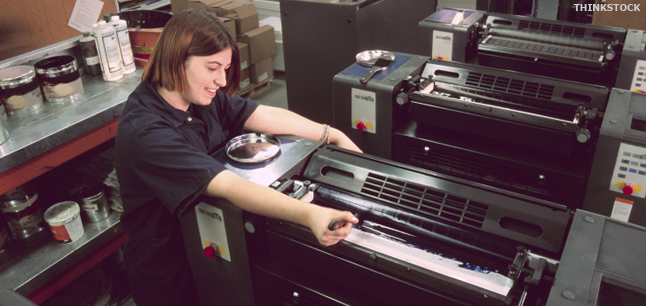
A machine printer sets up and operates different types of printing machines or ‘presses’. They watch over the presses while they are running and sort out any problems that come up, for example a paper jam or colour imperfections in the printed item.
The Work
There are different types of printing techniques, including offset litho, flexography, gravure and digital, but you would usually work on one particular type of machine. You could be:
getting the presses ready for printing — fitting and adjusting the printing plates and cylinders
checking that paper and ink meet the requirements of the job
matching colours to the customer’s requirements
loading the paper and ink and checking levels throughout the print run
setting the machine controls, for example, paper size, paper margins, ink flow and tension — most presses are now computer controlled
checking proof copies and making necessary adjustments to the machine before printing the full run
maintaining stock levels of supplies
doing basic machine maintenance and repair — oiling and cleaning the presses.
Pay
The figures below are only a guide. Actual salaries may vary, depending on:
where you work
the size of the company or organisation you work for and whether you are self-employed
the demand for the job.
A qualified machine printer can earn around £24,000 a year. An experienced machine printer can earn around up to £35,000 a year or more, depending on size of the employer and level of experience.
Conditions
You will probably work in a printing warehouse or workshop.
Your workplace may be noisy and hot.
You may need to use protective clothing or equipment to work with some types of machines.
You would probably handle chemicals, for example special cleaning fluids.
A good general education is useful. Many employers look for a group of 4 or 5 subjects at National 4 or 5. English, Maths, science subjects and Computing Science are very useful.
You may be able to get in by doing a Modern Apprenticeship in Print Industry Occupations, leading to SVQs.
Companies you might work for include a printing warehouse, newspaper print room, in-house printing shop or workshop.





 2026
2026

